
What is a Dental Filling?
A dental filling is a restorative treatment used to restore the normal function and aesthetic appearance of a tooth damaged by decay, fracture, or abrasion. After the damaged area of the tooth is cleaned, the cavity is filled with a special filling material. This process prevents further damage to the tooth, restores chewing function, and protects oral health. In modern dentistry, the materials used for dental fillings have evolved significantly in terms of both aesthetics and durability. At specialized dental centers like the DTM Clinic in Gaziantep, the filling material and technique best suited to the needs and aesthetic expectations of patients are meticulously determined.
Our Dental Filling Services
At DTM Clinic, we offer a wide range of filling services to maximize the oral and dental health of our patients. Each filling type offers specific advantages for different needs and conditions. Our services include:
- Composite Fillings (White Fillings): These are the most preferred type of fillings for aesthetic reasons, matching the natural color of the tooth. They are safe for use on both front and back teeth.
- Amalgam Fillings (Gray Fillings): These are traditionally used, durable, and long-lasting metal alloy fillings. They are a suitable option for back teeth, where chewing pressure is high.
- Porcelain Fillings (Inlays/Onlays): These are laboratory-made fillings that are more aesthetically pleasing and durable than composite. They are especially used in the treatment of large cavities.
Tooth Decay and the Need for Fillings
Tooth decay occurs when acids produced by bacteria in the mouth break down food debris, eroding tooth enamel. Initially manifesting as white or brown spots on the tooth surface, decay progresses into the inner layers of the tooth, creating a cavity. At this stage, filling treatment becomes necessary. Unfilled decay can reach the nerve of the tooth, causing severe pain, infection, and tooth loss. Therefore, early diagnosis and treatment of decay is vital for maintaining oral health. Regular dental checkups allow for the detection of decay in its early stages.
Who is a Good Candidate for a Dental Filling?
Dental fillings are an appropriate treatment for individuals with the following conditions:
- Those with Decayed Teeth: This is the most common reason for a filling.
- Those with Broken or Cracks in Their Teeth: Repair of small fractures caused by trauma or chewing pressure.
- Those with Worn Teeth: Repair of wear caused by habits such as improper brushing or clenching.
- Those with Old or Damaged Fillings: Replacement of old fillings if they wear out or leak over time.
- Those with Aesthetic Concerns: Those who want to aesthetically correct small gaps or deformities in their teeth.
Before starting treatment, The most appropriate filling material is determined by evaluating the patient’s general oral health, the location, and size of the tooth to be filled.
Pre-Dental Filling Examination and Evaluation
A successful dental filling procedure begins with a comprehensive examination and accurate diagnosis.
- Intraoral Examination: The dentist visually examines the size, depth, and location of the decay. He or she evaluates the tooth’s general condition and other potential problems.
- Radiographic Imaging: X-rays show how far the decay has penetrated the internal structure of the tooth, whether it is close to the root, and whether there is decay in adjacent teeth. This is especially important for preventing post-filling sensitivity.
- Treatment Planning: Based on the obtained data, the dentist recommends the most appropriate filling material and treatment method for the patient. Factors such as cost, aesthetic expectations, and durability are discussed at this stage.
At Gaziantep DTM Clinic, this preliminary evaluation is meticulously performed using state-of-the-art digital imaging technologies.
What is a Composite Filling and Its Advantages
Composite fillings are a resin material composed of glass and ceramic particles that match the natural color of the tooth. Because they are light-cured, they are also known as “white fillings.”
Advantages:
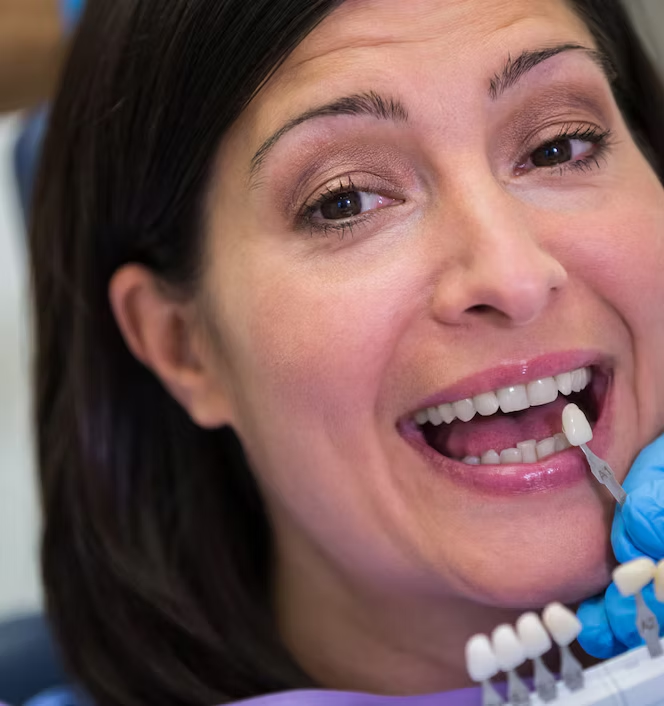
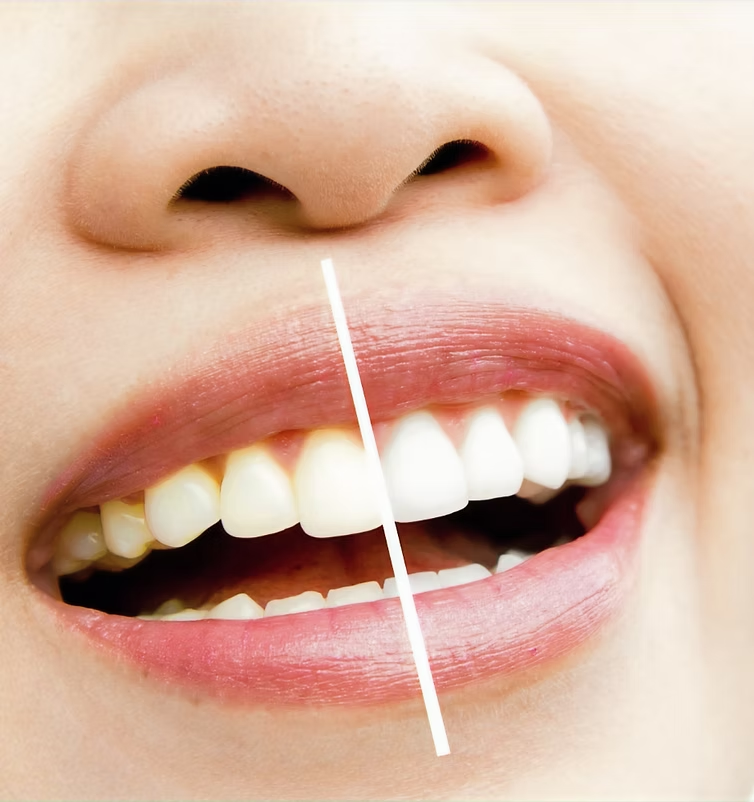
- High Aesthetics: It perfectly matches the color of the tooth, making the filling invisible.
- Conservative Approach: During the application, minimal intervention is made on the tooth, preserving healthy tooth tissue.
- Areas of Use: It can be safely used on both front and back teeth.
- Quick Application: It is usually completed in a single visit, and the patient can return to their normal routine the same day.
What is an Amalgam Filling and Its Use
Amalgam fillings are made of silver,It is a silver-colored filling material composed of a mixture of metals such as amalgam, copper, and mercury.
Usage:
- Durability: Amalgam is highly resistant to chewing pressure and is long-lasting.
- Cost: It is more economical than composite and porcelain fillings.
- Application: It is easy to apply and provides successful results even in humid environments.
- Generally Preferred for Back Teeth: Due to its high durability, it is still used in back teeth where aesthetic concerns are low.
What is a Porcelain Filling (Inlay/Onlay)?
Porcelain fillings are a type of filling that is prepared in a laboratory environment and then fixed to the tooth with special adhesives. Inlay is used when the filling is applied only to the surface of the tooth, while Onlay is used when the filling also covers the crown of the tooth.
Features:
- Maximum Aesthetics and Durability: Perfectly matches the natural color and shine of the tooth. Porcelain material is harder and more resistant to staining than composite.
- Large Restorations: It protects the tooth without a crown (capping), especially in the treatment of large cavities.
- Precision Fit: It fits perfectly to the tooth because it is prepared in the laboratory using computer-aided systems (CAD/CAM).
How is a Dental Filling Done?
Although the dental filling process varies depending on the type of filling, the general steps are as follows:
- Anesthesia: Local anesthesia is applied to minimize pain during the procedure.
- Cleaning the Decay: Decayed and damaged tissue is completely removed using special dental instruments.
- Tooth Preparation: To ensure good adhesion of the filling material to the tooth, The tooth surface is properly prepared.
- Filling Application: The selected filling material is placed in the cleaned cavity. Composite fillings are applied in layers, each layer hardened with a special light.
- Shaping and Polishing: The filling is shaped to the anatomical structure of the tooth, excess material is removed, and the surface is polished to achieve a smooth surface.
Points to Consider After a Dental Filling
To accelerate the healing process after a dental filling and extend the life of the filling, the following points should be considered:
- Sensitivity: Slight sensitivity to hot or cold foods and drinks is normal for a few days after the procedure. This usually resolves quickly.
- The First Hours: Be especially careful not to bite your lips, tongue, or cheeks until the local anesthesia wears off.
- Diet: It is recommended to avoid hard and sticky foods for the first 24 hours. Chewing should be directed to the other side until the filling has completely hardened.
- Oral Hygiene: Regular brushing and flossing after a filling is placed is vital for the health of the filling and the teeth.
Dental Fillings and Oral Hygiene
Filling treatment is an important step in removing tooth decay, but the longevity of the filling and its oral health are directly related to the hygiene followed afterward. Regular and correct brushing (at least twice a day), flossing, and mouthwash prevent the formation of new cavities around the filling margins. Inadequate hygiene can cause secondary decay to develop under or around the filling, necessitating its replacement.
Dental Filling Lifespan and Durability
The lifespan of a dental filling varies depending on the material used, the size of the filling, the patient’s oral hygiene, and their dietary habits.
These periods can be extended with regular checkups and proper care.
Dental Filling Frequency and Checkup Recommendations
Regular dental visits are crucial to minimize the need for dental fillings and to check the condition of existing fillings.
- Six Month Checkup: Teeth and existing fillings should be checked at least twice a year by visiting the dentist.
- Early Detection: These checkups allow for the early detection of potential new cavities or leaks in existing fillings.
- Professional Cleaning: Regular dental cleanings help prevent decay.It prevents the accumulation of plaque and tartar that cause tooth decay.
Tooth Sensitivity and Fillings
Sensitivity after a filling is usually a temporary condition that resolves on its own within a few days. However, sometimes sensitivity can last longer due to factors such as a high filling or the treatment of a deep cavity. In this case, a dentist should be consulted. In cases of sensitivity, using special desensitizing toothpastes and avoiding very hot or cold foods may be helpful.
At DTM Clinic in Gaziantep, scientific methods and patient-centered approaches are adopted to minimize the risk of post-filling sensitivity.
Who Are We?
DTM Clinic in Gaziantep is a dental clinic that provides modern dentistry services, offering aesthetic and functional solutions to its patients with its expert staff and state-of-the-art equipment. We aim to protect the oral and dental health of patients of all ages and help them achieve a confident and healthy smile. Our clinic offers a comprehensive range of services, including both daily dental care and advanced treatments.