What is a Dental Implant?
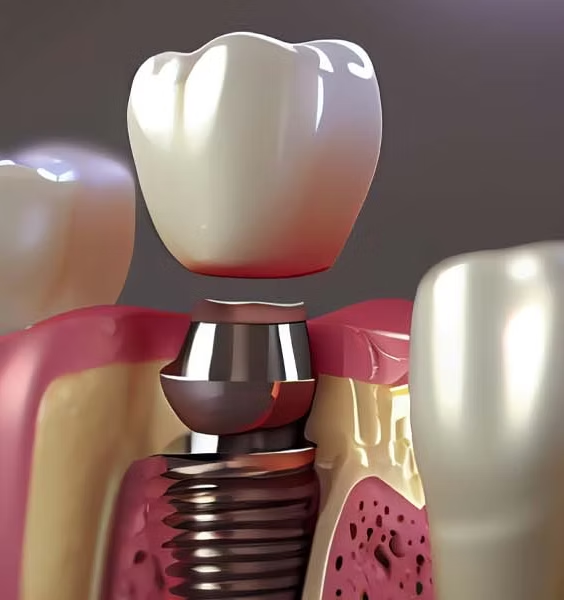
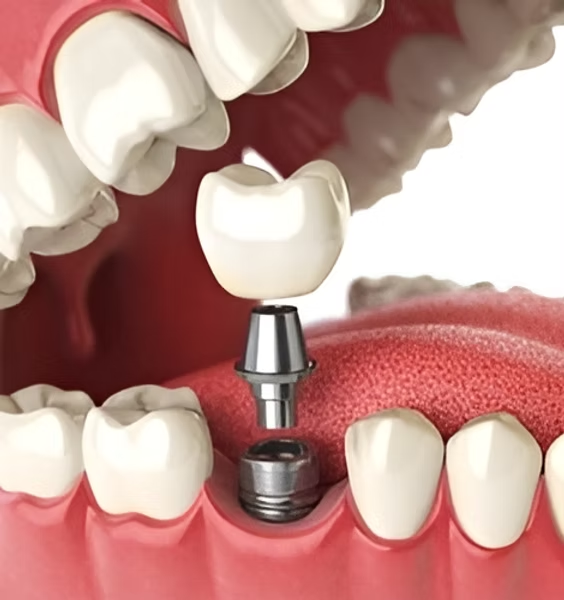
A dental implant is an artificial tooth root made of titanium that is surgically placed in the jawbone to replace missing teeth. Because titanium is a biocompatible material, it is not rejected by the human body and, over time, fuses with the jawbone (osseointegration) to form a permanent structure. This permanent structure serves as a strong foundation for anchoring dental restorations such as porcelain crowns, bridges, or removable dentures. Dental implants not only replace missing teeth but also prevent jawbone resorption caused by edentulousness. In this respect, they are considered one of the most successful and long-lasting dental treatments in modern dentistry. At the DTM Clinic in Gaziantep, implant treatments are meticulously performed using the latest technologies and scientific approaches.
Our Dental Implant Services
At DTM Clinic, we offer comprehensive and personalized implant solutions for our patients’ missing teeth. Our goal is to provide our patients with the best functional and aesthetic results. Our services include:
- Single Tooth Implant: This is the most common implant treatment used to fill the gap in cases of a single tooth without damaging the adjacent teeth.
- Multiple Tooth Implant: In cases of multiple tooth loss, restoration is achieved with a bridge prosthesis by placing several implants depending on the number of missing teeth.
- Complete Edentulous Implant Treatments: In cases where all the teeth in the upper or lower jaw are missing, a fixed prosthesis is applied using advanced implant techniques such as All-on-Four or All-on-Six.
- Bone Grafting and Sinus Lift: These are advanced surgical procedures performed to prepare a suitable base for implant placement in patients with insufficient bone volume.
Who Can Have Dental Implants?
Dental Implants The treatment can be applied to most adults who are in good general health and whose jawbone structure is suitable for supporting the implant. However, certain factors determine the suitability of this treatment:
- Sufficient Bone Volume and Density: The jawbone must have sufficient volume and density for the implant to integrate successfully. In cases of insufficient bone, additional procedures such as bone grafting may be necessary.
- General Health Status: Chronic conditions that are under control (such as diabetes or heart disease) do not preclude implant treatment. However, risks should be assessed for patients with severe systemic diseases or immune system problems.
- Oral Hygiene: For a successful implant to last, it is important for the patient to have good oral hygiene habits.
- Smoking and Alcohol Use: Smoking and alcohol can negatively affect the healing process and increase the risk of implant failure.
At the DTM Clinic in Gaziantep, a detailed preliminary evaluation is performed for each patient, and the most appropriate treatment plan is created.
What are the Advantages of Dental Implants?
Dental implants offer several significant advantages over traditional methods of replacing missing teeth:
- Natural Look and Feel: Implants provide the closest aesthetic and function to natural teeth with crowns.
- Protection of Neighboring Teeth: Unlike bridgework, implants do not damage neighboring teeth for support, which allows healthy dental tissue to be preserved.
- Prevents Jawbone Resorption: Implants transmit chewing forces to the jawbone, stopping bone resorption and helping to preserve facial features.
- High Success Rate: With proper planning and implementation, implant treatments have a very high success rate.
- Restores Speech and Chewing Function Healing: Unlike removable dentures, implants remain stable during chewing and speaking, improving the patient’s quality of life.
- Longevity: With good care and regular checkups, implants can last a lifetime.
How Does Dental Implant Treatment Progress?
Implant treatment is a meticulously planned process consisting of several stages.
- Examination and Planning: Before starting treatment, the patient’s oral and general health is evaluated. The jawbone structure is examined in detail using panoramic X-rays and cone beam computed tomography (CBCT).
- Surgical Phase (Implant Placement): Under local anesthesia, implants are placed in the jawbone at the designated location. The procedure usually takes 30-60 minutes.
- Healing Process (Osseointegration): A 3 to 6-month healing period is expected for the implant to fuse with the jawbone. During this period, patients may use temporary dentures if necessary.
- Denture (Superstructure Phase: Once healing is complete, an abutment is placed over the implant, and then a permanent porcelain crown, bridge, or denture is mounted.
Pre-Dental Implant Examination and Planning
The most important step in successful implant treatment is a detailed preliminary examination and accurate planning. In this phase:
- Comprehensive Imaging: Following an intraoral examination, the dentist uses 3D imaging (CBCT) to determine the volume and density of the jawbone and the location of the nerve canals and sinus cavities.
- Risk Analysis: The patient’s risk factors, such as smoking and diabetes, are evaluated.
- Treatment Plan: Based on the obtained data, the size, number of implants, and the ideal placement location are determined. This planning maximizes the success of the treatment.
- Cost and Duration: The patient is provided with detailed information about the treatment process, its stages, and its cost.
At the DTM Clinic in Gaziantep, this process is made as safe as possible for patients using state-of-the-art digital planning software.
Implant Application for Single Tooth Missing
In cases of a single tooth missing, an implant is the best restoration option. While traditional bridgework requires the reduction of healthy teeth on either side of the missing tooth, implant treatment leaves the adjacent teeth untouched. Implants replace a single tooth, providing a natural solution that is both aesthetic and functional.
Implant Solutions for Multiple Missing Teeth
In cases where multiple teeth are missing, a bridge can be secured to two or more implants instead of using separate implants for each missing tooth. This method reduces costs by reducing the number of implants and offers the comfort of a fixed prosthesis.
All-on-Four and All-on-Six Implant Methods for Complete Edentition
These are advanced implant techniques that offer a stable and comfortable solution for completely edentulous patients, replacing removable dentures.
- All-on-Four: A fixed bridge prosthesis is placed on four implants strategically placed in the upper or lower jaw. The angled placement of the posterior implants eliminates the need for bone grafts, even in patients with advanced bone loss.
- All-on-Six: Similar to All-on-Four, a denture is placed on six implants. Using more implants provides greater stability and support, especially in areas with poor bone density.
These methods allow patients to receive temporary fixed teeth on the same day with a single surgical procedure, instantly improving their quality of life.
Post-Implant Healing Process
The healing process after implant placement typically takes 3 to 6 months. Important points during this period:
- First 24 Hours: Ice should be applied to the extraction site, and prescribed medications should be taken regularly.
- Diet: Soft and warm foods should be preferred in the first few days, and hard foods should be avoided.
- Oral Hygiene: Oral hygiene should be maintained as recommended by the dentist.
- Smoking and Alcohol: Smoking and alcohol consumption should be avoided, as they negatively affect the healing process.
Durability and Lifespan of Dental Implants
With proper planning, professional application, and good oral hygiene, dental implants can last a lifetime. The most important factors that determine the lifespan of an implant:
- Patient Care: Regular brushing, flossing, and professional cleanings.
- Regular Checkups: Visiting a dentist at least once or twice a year.
- Smoking: Smoking damages the tissues surrounding the implant, increasing the risk of failure.
Dental Implants and Aesthetic Appearance
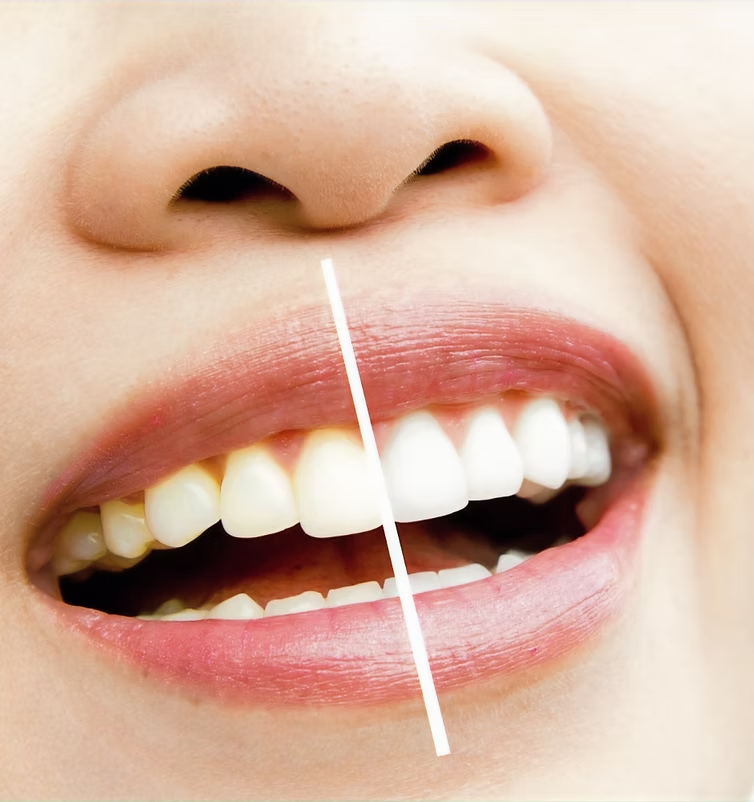
Dental implants offer excellent results not only functionally but also aesthetically. The porcelain crowns placed on the implant are custom-made to match the color and shape of the patient’s other teeth. This results in an aesthetically pleasing and harmonious smile that is indistinguishable from natural teeth.Thanks to its protection, it also prevents facial features from collapsing.
Differences Between Dental Implants, Bridges, and Dentures
Dental implants are a more modern and permanent solution than bridges and removable dentures.
At DTM Clinic in Gaziantep, the most appropriate treatment method for you is determined through a detailed consultation, taking into account all these differences and your expectations.
Who Are We?
DTM Clinic in Gaziantep is a dental clinic that provides services with a modern approach to dentistry, offering aesthetic and functional solutions to its patients with its expert staff and state-of-the-art equipment. We aim to protect the oral and dental health of patients of all ages and help them achieve a confident and healthy smile. Our clinic offers a comprehensive range of services, including both daily dental care and advanced treatments.